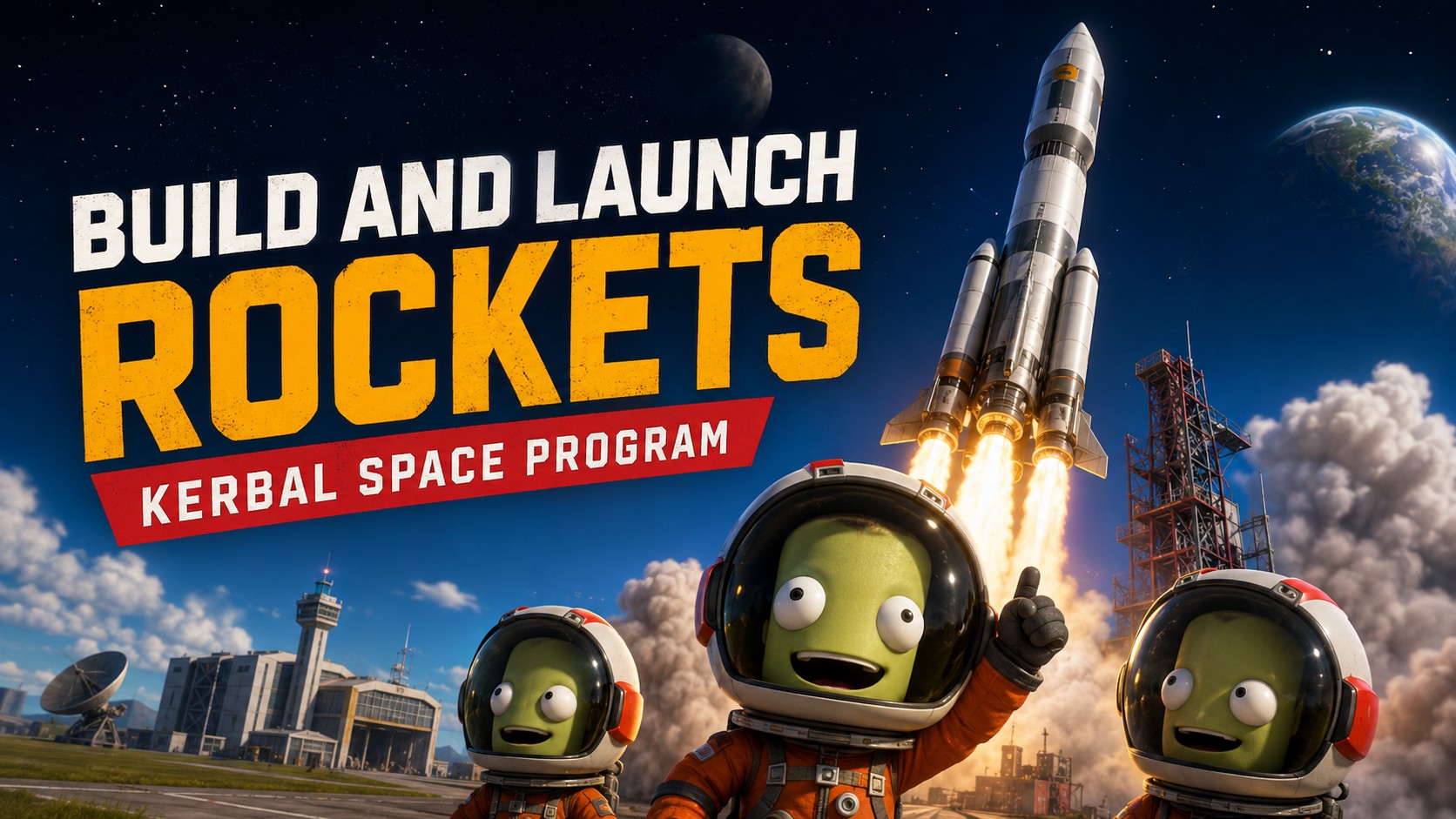
Rocket Engineering & Astrodynamics in KSP
Design, build, and launch rockets into space!
Science, Engineering & Coding
Organized by Recess
Hosted by 1 expert guide
KSP is one of the best ways to learn real physics and engineering. You'll build rockets, figure out why they explode, fix them, and try again until they work.
By the end of the course you'll understand thrust, gravity, drag, and orbital mechanics. Not because someone lectured you on it, but because your rocket wouldn't fly until you figured it out!
What You'll Do
Every challenge you clear unlocks a harder one. There's no finish line, just how far you get:
- Learn the basics How the game works, how to build a simple rocket, and why most first launches end in explosions. That's part of the fun.
- Get off the ground Build a rocket that actually flies, learn how to control it, and start understanding thrust, staging, and aerodynamics.
- Build a real ship Design a spacecraft that can actually go somewhere, and learn about fuel efficiency, weight, and mission planning along the way.
- Reach orbit This is the big one. Getting into orbit means understanding how gravity and velocity work together. When it clicks, it really clicks.
- Keep going Flybys, landings, rescues, return trips, whatever you're ready for. Some people make it to the Mun. Some go further.
What You'll Need
- Kerbal Space Program (KSP 1) installed and ready to go on your computer. Available on Steam. If you don't have it, we'll buy it for you.
- A computer that can run the game Most laptops and desktops from the last several years will work fine. KSP does not run on Chromebooks
How It Works
- 12 weeks minimum of live sessions
- Ages 8 to 14
- Small groups so you get real help and make new friends
Pick a time
Age ranges are just suggestions! You can register for any cohort.
Meet the guides
Expert guides leading this course
I'm a network security engineer with passions for spaceflight, automation, and system optimization